
In many workshops and manufacturing facilities, you've probably heard this rule:
"The bolt should extend at least three threads beyond the nut."
Many engineers and technicians follow this rule without questioning it.
But why three threads?
Is it simply a shop-floor tradition, or is there a sound engineering reason behind it?
In this article, we'll explain what the "three-thread rule" means and why it helps improve the safety and reliability of bolted joints.
目次
What Is the Three-Thread Rule?
The three-thread rule means that at least three complete threads of the bolt should protrude beyond the top surface of the nut after tightening.
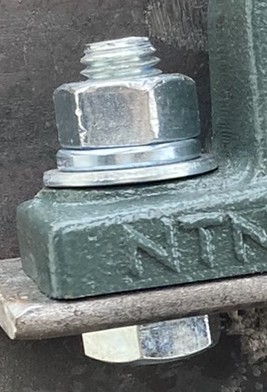
This simple visual check is widely used in mechanical and structural assemblies.
Why Are Three Threads Recommended?
There are several practical reasons.
To Ensure Full Thread Engagement
A standard nut is designed to achieve its rated strength when its internal threads are fully engaged with the bolt.
However, in real applications, several factors can reduce effective thread engagement:
- Manufacturing tolerances
- Pitch variations
- Chamfered threads at the ends of bolts and nuts
Because the first and last threads are not always fully formed, allowing the bolt to extend beyond the nut provides additional assurance that the load is carried by complete, fully engaged threads.
Easier Visual Inspection
One of the biggest advantages of the three-thread rule is that it makes inspection simple.
When at least three threads are visible, inspectors can quickly confirm that:
- The bolt is long enough.
- The nut has been fully installed.
- The joint has likely been assembled correctly.
If only one or two threads are visible, it becomes difficult to determine whether the bolt length is sufficient or whether the nut has been fully tightened.
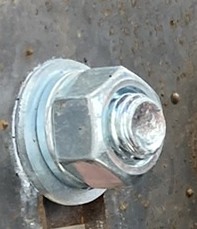
This simple visual standard helps reduce assembly errors on the shop floor.

Better Load Distribution
The threads at both ends of a bolt are often chamfered and are not fully effective in carrying load.
As a result, the first few visible threads beyond the nut help ensure that the nut is engaging the bolt's fully formed threads.
This contributes to:
- More uniform load distribution
- Stable clamping force
- Reduced risk of thread damage
What Happens If the Bolt Doesn't Extend Far Enough?
Insufficient thread protrusion can lead to several problems.
Inadequate Thread Engagement
If too few threads engage the nut, the joint may not develop its intended strength.
Incomplete Tightening
A bolt that appears flush with the nut may indicate that the bolt is simply too short.
This increases the risk of improper assembly and loosening.
Higher Thread Stress
When fewer threads share the load, the load becomes concentrated on the first engaged threads.
This increases the likelihood of thread stripping or failure under heavy loading.
Why Three Threads?
You may wonder:
"Why not one or two?"
The answer is that three threads is a practical engineering guideline rather than a strict universal design requirement.
In general:
| Visible Threads | Practical Assessment |
|---|---|
| 0–1 | Usually insufficient |
| 2 | May be acceptable in some cases but leaves little margin |
| 3 or more | Preferred for reliable assembly and inspection |
The recommendation provides a reasonable safety margin while making visual inspection straightforward.
Design Considerations
Selecting the correct bolt length is just as important as selecting the correct bolt diameter.
Engineers should always consider:
- Material thickness
- Washer thickness
- Nut height
- Manufacturing tolerances
A bolt that is too short may not provide adequate thread engagement.
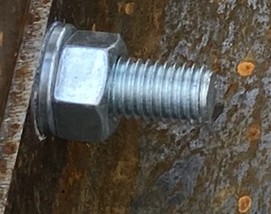
A bolt that is excessively long is also undesirable because it may:
- Interfere with nearby components
- Reduce assembly efficiency
- Increase the risk of accidental contact or injury
- Create an untidy appearance
Good bolted joint design is about choosing the appropriate bolt length—not simply the longest available bolt.
Key Takeaways
The three-thread rule is much more than a workshop habit.
It helps ensure:
- Adequate thread engagement
- Reliable visual inspection
- Stable load distribution
- Improved assembly quality
Although it is not a universal requirement specified for every bolted joint, it remains a widely accepted engineering practice that improves reliability and helps prevent common assembly mistakes.
Final Thoughts
A bolt may look like a simple component, but details such as bolt length, thread engagement, and washer selection have a significant impact on joint performance.
Understanding the reason behind the three-thread rule allows engineers to design safer and more reliable bolted connections—not simply follow a rule out of habit.
Looking for more practical mechanical design tips? Explore our other engineering articles for guides on bolts, washers, fasteners, fatigue, and machine design fundamentals.
If you're interested, feel free to check out my other articles on mechanical design.
